Beyond the Spotlight: How Seasoned Collectors Find Hidden Gems at Art Fairs and Gallery Openings
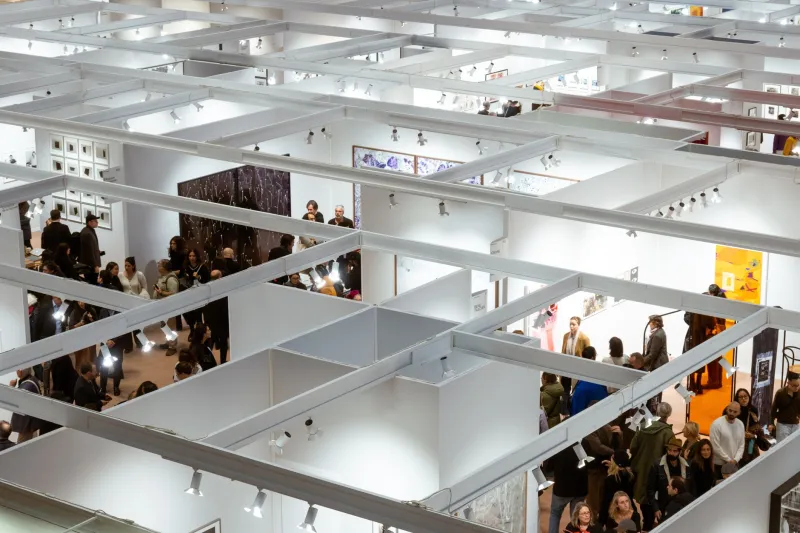
There is a particular kind of collector who arrives at an art fair not to confirm what they already know, but to be genuinely surprised. They move differently through the crowd — slower in some places, unexpectedly decisive in others. They pause at booths that others pass without a second glance. And more often than not, they leave with something that will matter deeply to them and, in time, to the broader art world.
The ability to spot overlooked work is not a mystical gift. It is a cultivated discipline, one that combines psychological self-awareness, practical observation skills, and a willingness to resist the gravitational pull of consensus. At Artag Gallery, we have spoken with gallery curators, independent art advisors, and veteran collectors across the United States to understand exactly how this discipline works — and how any collector, at any level, can begin to develop it.
The Tyranny of the Crowd
Human attention is contagious. At a packed gallery opening in Chelsea or a sprawling art fair like Untitled Art Fair in Miami Beach, crowds naturally cluster around whatever has already attracted a crowd. This feedback loop is powerful and, for the discerning collector, enormously useful — because it tells you precisely where not to focus your energy first.
"The work that everyone is photographing on opening night is rarely the work that defines a career," says one New York-based art advisor who works with mid-level collectors building long-term holdings. "The piece that matters is usually the one hanging in a slightly awkward corner, or the one that requires you to stop and look twice before you understand it."
This is not a cynical observation. It is a structural one. Curators and fair directors make deliberate decisions about placement, lighting, and wall real estate. The works given premium positioning are often the ones already validated by price, reputation, or institutional backing. Everything else — which frequently includes some of the most original and emotionally resonant work in the room — occupies the periphery.
Slowing Down as a Collecting Strategy
One of the most consistently cited habits among experienced collectors is the practice of deliberate deceleration. Rather than moving through a fair at the pace the crowd dictates, they set their own rhythm — often arriving early before the opening crowd arrives, or returning on the final day when the social performance of the event has quieted.
The practical benefit is significant. Without the noise of social validation, collectors report being more attuned to their own genuine responses. A work that produces a quiet but persistent pull — what one Los Angeles-based collector described as "the feeling that you are not quite finished looking at it" — is worth investigating further, regardless of whether anyone else in the room has stopped to look.
This instinct-versus-hype distinction is something advisors return to repeatedly. Hype produces excitement that peaks quickly and fades. Genuine aesthetic response tends to accumulate. If you find yourself thinking about a piece the following morning, that is information worth acting on.
Reading the Signals of Undervalued Talent
Beyond personal response, there are observable indicators that a work or an artist may be undervalued relative to their actual quality and trajectory.
Institutional attention without market recognition. When an artist has been included in museum group exhibitions, residency programs, or curated nonprofit shows but has not yet attracted significant collector attention, a meaningful gap often exists between critical standing and market price. This gap tends to close — but collectors who recognize it early benefit most.
Coherent body of work at an early career stage. A young artist who already demonstrates a consistent, evolving visual language is showing something that takes many practitioners years to develop. Curators at reputable galleries notice this; the broader market often lags behind.
Engaged, specific conversation from the gallerist. When a gallery representative can speak with genuine depth and specificity about an artist's practice, references, and intentions — rather than defaulting to biographical bullet points and recent sale prices — that depth of engagement is itself a signal. It suggests a real curatorial relationship and a meaningful investment in the artist's development.
Real Discoveries, Real Lessons
The stories collectors tell about their most meaningful acquisitions follow a recognizable pattern. A painter working in an unfashionable medium. A sculptor whose scale made their work easy to overlook in a crowded booth. A photographer whose prints were priced modestly because the edition was large and the artist was unknown outside a regional scene.
In each case, the collector had to actively resist the pull toward the familiar and the already-validated. One Chicago-based collector recounts purchasing a large textile work at a regional fair in the Midwest — a medium and a context that signaled "craft" to most visitors rather than "fine art." The artist has since been acquired by two major American institutions. "I almost walked past it," she admits. "I had to make myself stop."
The act of stopping is, in many ways, the entire practice.
Practical Steps for Your Next Opening
For collectors who wish to develop this skill deliberately, a few concrete approaches are worth building into your routine:
- Arrive with a plan to look twice. On your first pass through a fair or opening, move quickly and note what catches your attention without stopping. On your second pass, give sustained attention to those works — and to the ones you nearly walked past.
- Separate the work from the wall text. Before reading an artist's biography or a gallery's description, spend time with the work itself. Form your own initial response before context shapes it.
- Ask the gallerist an open question. Rather than asking about price or provenance first, ask what the artist is working on now, or what problem the work is trying to solve. The answer will tell you a great deal about whether the gallery has a genuine relationship with the artist.
- Keep a record. Photograph works that produced a response — even an ambivalent one — and revisit them a week later. The ones that continue to hold your attention are worth pursuing.
The art fair and the gallery opening are, at their best, exercises in possibility. The collector who learns to look beyond the spotlight does not simply find better prices. They find a more honest, more personal relationship with the art itself — which is, ultimately, the foundation every meaningful collection is built upon.