Chosen Discomfort: What It Means to Deliberately Live With Art That Unsettles You
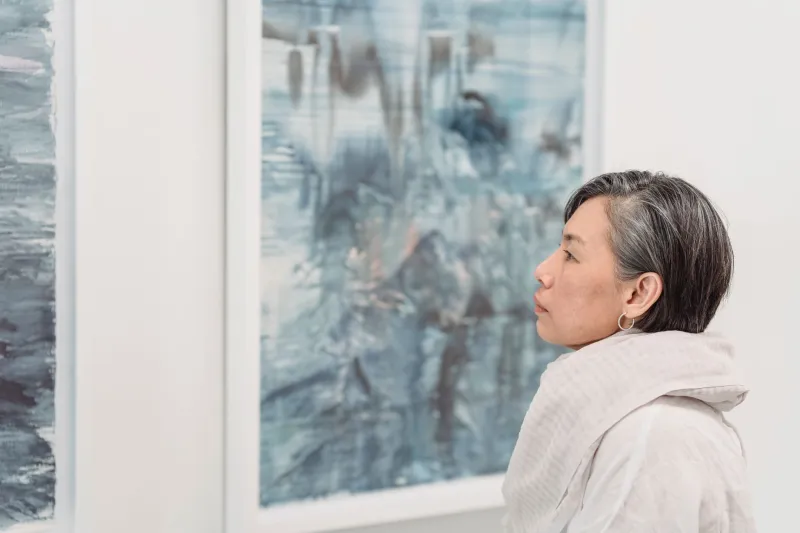
There is a particular kind of collector who does not hang art to feel calm. They do not curate for harmony or choose colors that complement the sofa. They acquire work that stares back at them over morning coffee, that lingers in the peripheral vision at dinner, that refuses to become wallpaper no matter how many months pass. This is not carelessness. It is, in fact, one of the most deliberate acts a collector can make.
The choice to live with genuinely uncomfortable art—work that confronts mortality, surfaces political tension, or depicts human experience in its most raw and unresolved forms—is a statement of psychological and philosophical intent. It is worth examining seriously.
Why Discomfort Is Not a Design Flaw
The conventional wisdom around residential art collecting tends to orbit comfort. Galleries advise buyers to choose work that speaks to them, that brings joy, that fits the scale of a room. These are not wrong instincts. But they represent only one model of what a collection can do.
Art that unsettles operates differently. It functions less as decoration and more as a recurring prompt—a visual argument installed in the domestic space that demands some form of ongoing engagement. Collectors who choose this kind of work often describe it in active terms: the painting challenges them, the sculpture confronts them, the photograph refuses to let them look away.
This language is revealing. It positions the artwork not as an object owned but as a presence endured—and, ultimately, valued precisely because of that endurance.
The Psychology Behind the Deliberate Choice
Psychologists who study aesthetic experience have long noted that human beings have a complex relationship with negative emotional states when those states are perceived as safe. Horror films, tragedy in theater, and melancholic music all generate distress that audiences willingly seek out. The discomfort is the point—because within it lies something generative.
For collectors, the calculus is similar but more intimate. Choosing to install a work that disturbs you in your own home removes the option of walking away. You cannot leave the theater. The experience becomes sustained rather than contained.
Many serious collectors describe a process of working through a difficult piece over time—returning to it, reconsidering it, finding new angles as their own circumstances shift. A large-scale painting depicting grief may feel unbearable in the weeks after a personal loss, then transformative six months later. The work has not changed. The collector has.
What the Choice Reveals About Identity
The decision to acquire uncomfortable art is, inevitably, a self-portrait of sorts. It signals a tolerance—even a preference—for complexity over resolution, for questions over answers. Collectors who pursue this kind of work tend to describe themselves as drawn to art that does something rather than art that looks like something.
There is also an element of intellectual honesty in the practice. Choosing work that reflects only beauty, only affirmation, only comfort, is a curation of the self in its most flattering light. Choosing work that disturbs is an acknowledgment that the full range of human experience—including its most difficult passages—deserves space in the home and in the mind.
This does not mean all collectors must pursue discomfort to be taken seriously. But it does suggest that those who do are engaged in a particularly rigorous form of self-examination through their collections.
Processing the Friction: Practical Approaches
Living daily with challenging work requires more than resolve. It requires a degree of intentionality about where and how that work exists within your environment.
Placement matters enormously. A piece that generates significant emotional weight may be better suited to a space you enter by choice—a study, a studio, a private reading room—rather than a communal area where its presence becomes unavoidable for others who have not made the same deliberate choice.
Context can be a companion. Many collectors find that maintaining some form of written or recorded reflection about their most challenging pieces helps them process the friction productively. Journals, voice memos, even informal notes about what a work evokes on a given day can transform passive discomfort into active dialogue.
Allow for recalibration. A piece that once disturbed you may, over time, lose its edge—or shift its nature entirely. Some collectors rotate challenging works seasonally, allowing them to rest and return to them with fresh eyes. Others find that moving a work to a different location within the home changes its psychological register significantly.
Know the difference between productive discomfort and genuine distress. There is a meaningful distinction between work that challenges you and work that actively harms your sense of wellbeing. Serious collectors who pursue difficult art are generally clear-eyed about this boundary. The goal is friction that generates growth, not distress that depletes.
The Long Conversation
One of the most compelling aspects of collecting art that unsettles is the long conversation it initiates—not just between the collector and the work, but between the collector and everyone who enters their home. Difficult art invites questions. It disrupts assumptions. It makes guests pause in doorways and reach for language they do not normally use.
For many collectors, this is precisely the point. The home becomes a space where the comfortable and the challenging coexist, where beauty and difficulty are not treated as opposites but as dimensions of the same honest engagement with the world.
To collect art that moves you—truly moves you, in the full sense of that word—sometimes means choosing work that does not let you settle. It means building a collection that insists on your attention, your reflection, and your willingness to sit with what you do not fully understand.
That, in the end, is one of the most profound things art can do. And the collectors who understand this are among the most serious practitioners of the form.