Coverage Without Guesswork: A Collector's Working Guide to Fine Art Insurance
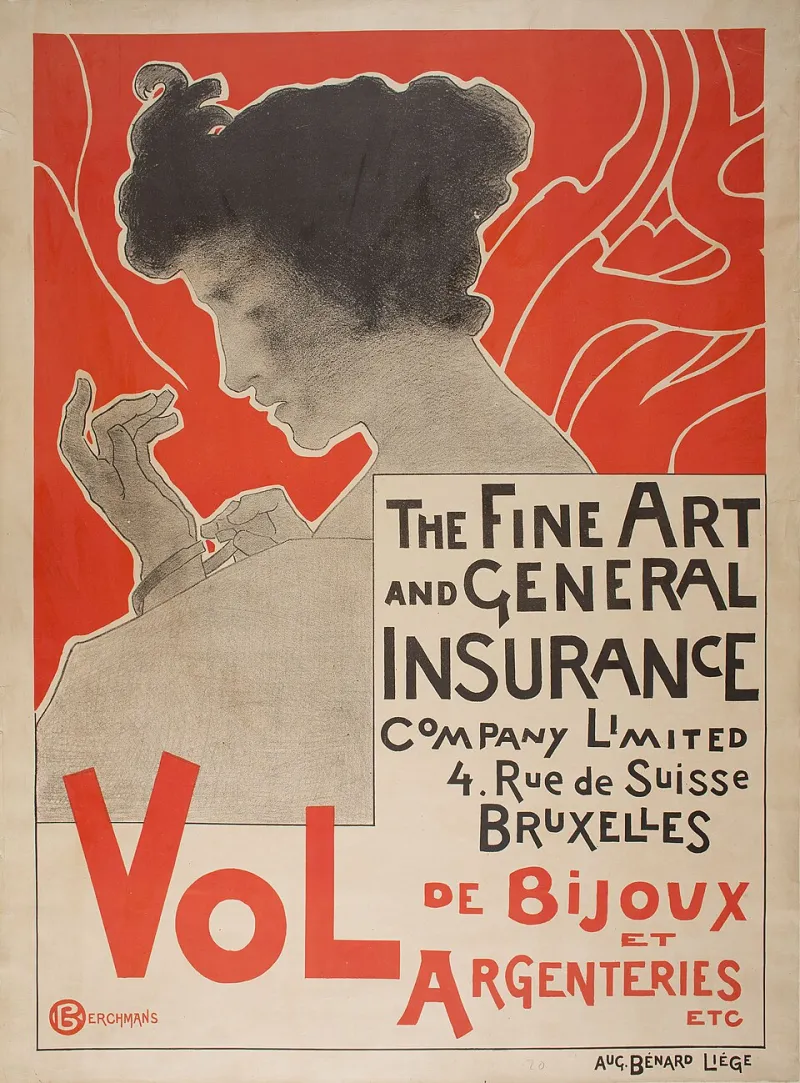
Photo: Émile Berchmans, Public domain, via Wikimedia Commons
Collectors often treat insurance as a closing formality: a document signed after the invoice is paid, filed away with the bill of sale, and revisited only when something goes wrong. That approach is understandable, but it misreads the purpose of coverage. Fine art insurance is not simply a financial backstop for catastrophe. It is a risk-management practice that should evolve with the collection itself, particularly in the United States, where homeowners policies vary significantly by state, carrier, and endorsement.
Homeowners Coverage Is a Starting Point, Not a Strategy
Many collectors assume that a standard homeowners policy will absorb the loss of a work of art. In practice, such policies frequently impose sublimits for fine art, scheduled personal property, or theft of valuable items. A policy may also exclude damage caused by transit, climate fluctuation, or accidental breakage unless specific coverage is added. The result can be a false sense of security: the collection appears insured, but only up to a fraction of its replacement value.
A standalone fine art policy, often written as an inland marine or scheduled personal property policy, is designed around the distinct behavior of art as an asset. It can cover named works, blanket collections, or both. It may extend to off-premises exhibitions, transit, loaned works, and newly acquired pieces for a limited period. The differences are not merely technical. They determine whether a claim is paid promptly and fully, or whether a collector discovers a gap at the worst possible moment.
Appraisals Are the Foundation of an Honest Policy
An insurer needs a defensible value, not a collector's optimistic estimate. A qualified appraisal should describe the work, its condition, provenance, medium, dimensions, and market context. For contemporary art, the appraisal may rely on comparable sales, gallery records, and artist market data. For traditional or secondary-market works, provenance and condition become especially important. The appraisal should be updated after significant market movement, a major purchase, or a meaningful change in the artist's career.
Collectors should also distinguish between market value, replacement value, and agreed value. These terms are not interchangeable. Agreed value can reduce disputes after a loss, but it depends on accurate documentation and periodic review. Replacement value may be appropriate for works that can be repurchased, while unique or irreplaceable works may require a different conversation with the insurer. The right structure depends on the collection, not on a generic formula.
The Risks That Slip Through Standard Language
Transit is one of the most frequently underestimated exposures. A work may be covered at home and in a gallery, yet excluded or limited while in a vehicle, storage facility, or temporary exhibition venue. Collectors who lend works should confirm whether the borrower's policy, the museum's policy, or their own policy responds first. Certificates of insurance are useful, but they should be read rather than merely filed.
Climate and environmental damage are equally easy to overlook. High humidity, direct sunlight, fluctuating temperatures, and proximity to HVAC systems can cause gradual harm that may not resemble a sudden accident. Some policies address these risks; others treat them as maintenance issues. Theft and accidental damage receive more attention, but they also require careful review. A policy that covers theft from a locked residence may not cover theft from a storage unit or a transient exhibition space.
Documentation Is a Practice, Not a Folder
Good documentation begins before a loss. Collectors should maintain high-resolution images of the front, back, frame, signature, edition number, and any condition issues. Invoices, certificates of authenticity, provenance records, conservation reports, and appraisal updates should be stored digitally and backed up separately from the artwork. A simple inventory with acquisition dates, values, locations, and loan history can make a claim far more efficient.
This practice also helps at resale. When a work leaves the collection, the collector can update the policy, remove the item from scheduled coverage, and preserve the records for tax or estate purposes. Insurance and collection management are closely linked; the collector who documents carefully tends to negotiate both coverage and resale with greater confidence.
Questions Worth Asking Before You Sign
Ask whether the policy covers transit, off-premises exhibition, climate damage, theft from storage, and accidental breakage. Ask how newly acquired works are treated before they are formally added to the policy. Ask whether the deductible applies per claim or per item, and whether pairs or sets are valued together. Ask what documentation is required for a claim and how long the insurer expects the process to take.
It is also worth asking whether the insurer has experience with art claims and whether it uses specialty adjusters. A standard claims handler may understand property loss but not the conservation, provenance, and market issues that accompany art. The answers to these questions reveal more about a policy than a headline premium does.
When to Revisit Coverage
Coverage should be reviewed after every significant purchase, sale, loan, or relocation. It should also be revisited after an appraisal update, a change in storage conditions, or a major shift in the artist's market. Collectors who inherit works or receive gifts should add them to the inventory promptly. The goal is not to create administrative busywork. It is to keep the policy aligned with the collection as it actually exists.
Fine art insurance works best when it is treated as part of collecting rather than as an afterthought. The collector who understands the difference between homeowners coverage and a standalone policy, maintains credible appraisals, documents the collection, and asks precise questions is not being overly cautious. That collector is simply protecting the conditions that make a collection possible.