One Work, One Vision: Building an Entire Home Around a Single Artwork
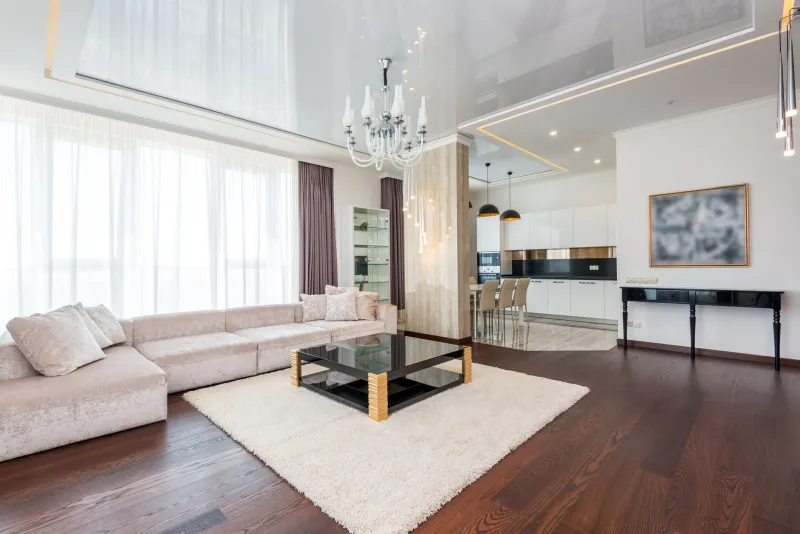
There is a particular kind of confidence required to walk into an art gallery, fall completely in love with a single painting, sculpture, or textile, and then return home to rethink everything you own in its light. It is not the confidence of wealth — though acquiring meaningful art does require investment — but rather the confidence of conviction. The conviction that one powerful work of art can serve as the gravitational center of a life well-lived.
This philosophy, sometimes called anchor-piece design, is gaining serious traction among American collectors and the interior designers who work alongside them. Rather than treating art as the final flourish applied to an already-furnished room, these individuals begin with the artwork and work outward — selecting paint colors, textiles, furniture, and lighting to serve the piece rather than compete with it.
Why the Traditional Approach Falls Short
The conventional model of home decoration tends to follow a predictable sequence: choose your furniture, establish a color palette, and then select artwork that coordinates with what is already in place. The result is often harmonious in a superficial sense — everything matches — but emotionally inert. Art chosen to complement a sofa rarely challenges the viewer. It rarely asks anything of the room at all.
San Francisco–based interior designer Margaux Ellery has spent over a decade working with private collectors to reverse this dynamic. "When a client comes to me and says, 'I have this piece that I cannot stop thinking about,' that is when the real work begins," she explains. "That emotional response is data. It tells us something essential about how that person wants to feel in their home, and that is a far more honest starting point than a paint chip."
Ellery's approach involves what she calls a "visual interview" with the artwork: studying its dominant and recessive colors, its mood, its scale, the quality of light it seems to generate or absorb. Only after this analysis does she begin specifying furnishings and finishes.
The Anchor Artwork as Narrative Device
When an artwork occupies the conceptual center of a room's design, it inevitably begins to function as more than decoration. It becomes a narrative device — a statement about the collector's values, sensibilities, and the kind of atmosphere they wish to cultivate.
Consider the experience of Marcus and Denise Thornton, a couple from Atlanta who purchased a large-scale abstract oil painting by a mid-career Southern artist at an independent gallery three years ago. The work — a layered composition of ochre, deep sienna, and muted gold — was acquired before their home renovation was complete, a circumstance that turned out to be fortuitous.
"We had a blank slate," Marcus recalls. "The contractor was still working, so we had the freedom to make decisions that the painting essentially made for us. The wall plaster color, the warm brass hardware, the linen upholstery — it all came from standing in front of that canvas and asking what it needed around it."
The finished space is striking in its coherence. Nothing in the room feels chosen at random. Visitors consistently remark that the home has a quality they struggle to articulate — a sense that it was designed with genuine purpose rather than assembled from a catalog.
Practical Principles for Anchor-Piece Design
For collectors considering this approach, a few foundational principles can guide the process without constraining it.
Scale informs scale. A monumental work demands generous space and restrained surroundings. Placing a large canvas in a room crowded with competing visual elements diminishes both the artwork and the room. Conversely, a smaller, intimate piece may call for a quieter, more contemplative setting — a reading alcove rather than a grand living room.
Color extraction requires subtlety. The most common mistake is pulling the most dominant color from an artwork and repeating it liberally throughout the space. Skilled designers typically reach for the secondary or tertiary tones — the colors that give the work its depth — and allow those to inform wall color, textiles, and decorative objects. This creates resonance without redundancy.
Lighting is not optional. An anchor piece deserves considered illumination. Whether through natural light management, directional track lighting, or picture lights mounted directly to the frame, the way a work is lit shapes how it reads in the room at every hour of the day. Many collectors invest significantly in the artwork itself and then undermine it with inadequate lighting.
Furniture as frame. Every piece of furniture in the room should function, in some sense, as part of the frame around the central work. This does not mean uniformity — variety of form and material can create visual interest — but it does mean that each element should be chosen with the artwork's presence in mind.
The Emotional Logic of Singular Focus
There is a broader cultural argument to be made for this approach, beyond its aesthetic merits. American homes are, in many respects, overwhelmed by objects. The impulse to fill every wall, surface, and shelf is understandable but often counterproductive, producing environments that feel busy rather than rich.
Building a room around one extraordinary work is an act of deliberate restraint. It acknowledges that some things are worth centering, worth protecting from visual noise, worth returning to again and again with fresh attention.
"The collectors I admire most are not the ones with the most art," says Ellery. "They are the ones who know exactly why each piece is where it is — and who could tell you the story of how they came to own it. That kind of intentionality is what separates a collection from an accumulation."
For those prepared to begin with a single, profound work and let it lead the way, the reward is a home that does not merely display art but genuinely embodies it — a space that feels, in the truest sense, like a reflection of the person who lives there.