Open House: The Private Collectors Transforming Their Homes Into Living Cultural Institutions
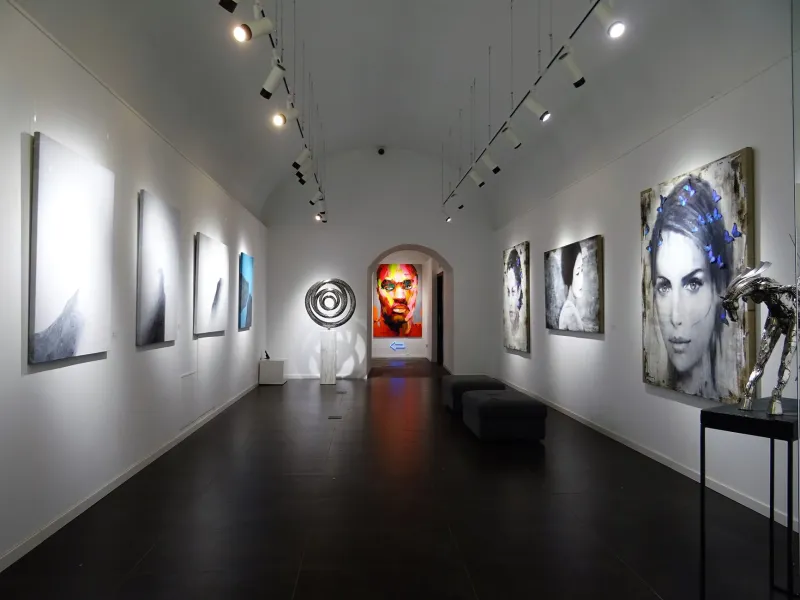
The invitation arrives by email, printed card, or — increasingly — a discreet social media post. It describes an evening of art, conversation, and wine in what is ostensibly a private residence. But the home in question houses a collection that rivals the holdings of many regional museums, and the evening's program includes a conversation with the artist whose work occupies the living room walls. This is not a gallery opening. It is something altogether different, and it is happening in cities and suburbs across America with growing frequency.
A quiet but significant movement is underway among serious art collectors who have begun to reimagine the purpose of their holdings. Rather than maintaining their collections as private pleasures — accessible only to invited guests and the occasional art advisor — these collectors are opening their doors, formally and informally, to artists, scholars, students, community organizations, and the general public. In doing so, they are raising fundamental questions about the relationship between private ownership and cultural stewardship.
The Impulse Behind the Opening
For most collectors, the decision to share their homes and collections with a wider audience does not arrive as a sudden revelation. It tends to emerge gradually, from an accumulating sense that the collection has outgrown its purely private function.
Carolyn Marsh, a retired physician who has spent 25 years assembling a collection of contemporary African American art at her home in Atlanta, describes the turning point with characteristic directness. "I had works by artists who deserved to be seen by thousands of people, and they were being seen by maybe 40 people a year. That started to feel like a failure — not of the art, but of my imagination about what to do with it."
Marsh now hosts quarterly viewings at her home, typically organized around a specific theme or artist, and open to members of the public who register through a local arts organization. Attendance averages 60 to 80 people per event. "The conversations that happen here are different from what you'd have in a museum," she observes. "People feel permission to ask questions they might be embarrassed to ask in an institutional setting. And they're standing in someone's living room, which changes everything about how they relate to the work."
This domestic intimacy is consistently cited by collectors and visitors alike as the defining quality of home-based exhibitions. Unlike the white-cube neutrality of a commercial gallery or the formal authority of a museum, a private home carries context — furniture, books, personal objects — that frames art in a distinctly human environment.
Navigating the Legal and Logistical Landscape
The transition from private collector to semi-public cultural host is not without complexity. Collectors who open their homes to the public, even on an occasional and informal basis, must navigate a range of legal and practical considerations that vary significantly by jurisdiction.
Zoning regulations represent the most immediate concern. Many residential areas have restrictions on the frequency and scale of public gatherings, and collectors who exceed these limits — whether through regular ticketed events or large-scale openings — may find themselves in conflict with local ordinances. Several collectors interviewed for this piece described consulting with attorneys before establishing their programs, a step that is strongly advisable.
Insurance is equally important. Standard homeowners' policies typically exclude liability coverage for public events, and art insurance policies may not extend to works displayed in the context of a public gathering. Collectors who open their homes regularly generally require specialized coverage that accounts for both property risk and personal liability.
Access and accommodation considerations apply as well. Homes are not designed to ADA standards, and collectors committed to genuine community inclusion must think carefully about how to make their spaces accessible to visitors with mobility limitations — a challenge that may require physical modifications or alternative programming formats.
Despite these complexities, most collectors who have established ongoing home programs describe the logistical investment as manageable and ultimately worthwhile. Many partner with established nonprofit arts organizations, which can provide administrative infrastructure, insurance coverage, and audience development support in exchange for programming access.
The Artist's Perspective
For artists whose work is featured in these home exhibitions, the experience carries its own particular qualities. The domestic setting places their work in a context that commercial galleries and institutional exhibitions rarely replicate, and the resulting conversations with visitors tend toward the personal and the specific rather than the general.
Portland-based painter Elena Vasquez, whose large-scale landscape works have been shown in a private home collection series in the Pacific Northwest, describes the format as unusually revealing. "People come up to me and say things like, 'This painting reminds me of the view from my grandmother's porch.' You don't get that in a gallery. The domestic environment gives people permission to bring their own lives into the conversation."
Artists also frequently note that home exhibitions reach audiences who might never enter a commercial gallery — neighbors, community members, and casual art enthusiasts who find the residential setting less intimidating than a formal art space. For emerging artists in particular, this expanded reach can be genuinely consequential.
Stewardship as a Second Vocation
Perhaps the most striking dimension of this movement is the degree to which collectors who engage in it describe a fundamental shift in their relationship to their holdings. The act of sharing a collection with a community does not diminish the collector's connection to the work; by most accounts, it deepens it.
David Chen, a technology entrepreneur whose San Francisco home houses an extensive collection of contemporary Asian American art, began hosting monthly artist talks three years ago. "I thought I was doing something for the community," he says. "What I didn't expect was how much it would change me. Watching someone encounter a work I've lived with for years, seeing it fresh through their eyes — it's given me back the experience of seeing art for the first time."
This reciprocity — the collector enriched by the act of sharing — appears to be a consistent feature of the phenomenon. Several collectors described their home programs as having clarified their sense of purpose as collectors, moving them from a model centered on acquisition toward one centered on activation.
A New Model for Cultural Participation
The home exhibition movement does not seek to replace museums or commercial galleries. It occupies a distinct position in the cultural ecosystem — more intimate than institutional, more committed than casual, and uniquely positioned to serve communities that larger art institutions may not reach effectively.
As public arts funding remains constrained and access to major institutional collections concentrated in a handful of cities, the private collector who opens their home represents a meaningful, if modest, expansion of cultural participation. The art world has long recognized the collector as patron. It is beginning to recognize them, in some cases, as something more: a custodian of culture who understands that the truest value of a collection is realized not in ownership alone, but in the living encounter between art and the people who need it.