Art That Demands Attention: Displaying Provocative Work Without Losing Your Sense of Place
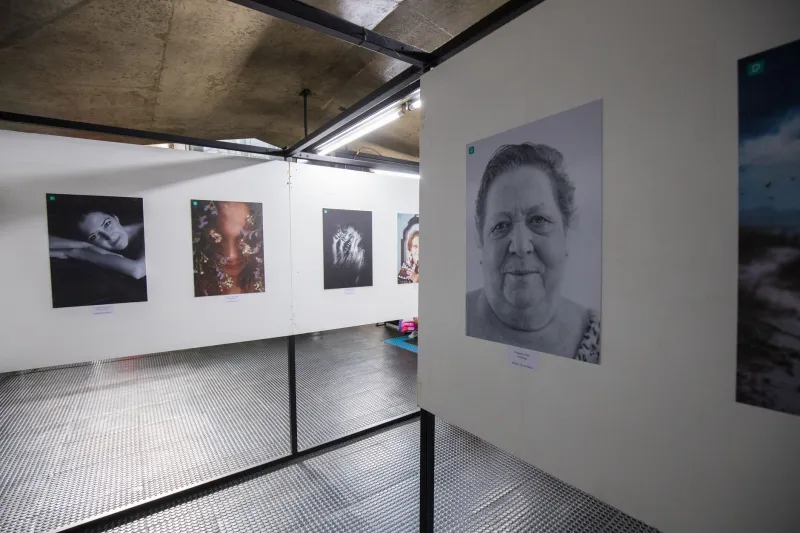
There is a particular kind of silence that falls over a room when a piece of art refuses to be ignored. It is not the comfortable quiet of a well-decorated interior — it is the charged stillness of a question left unanswered, a wound left visible, a truth left unadorned. For collectors who have chosen to live with challenging, politically charged, or visually confrontational work, that silence is precisely the point. Yet even the most committed collector must reckon with a practical reality: a home or office is not a gallery, and the people who inhabit these spaces did not necessarily consent to an immersive curatorial experience.
Displaying provocative art with intention — rather than with apology or recklessness — is one of the more nuanced skills a serious collector can develop. It requires an understanding of psychology, spatial composition, and the social dynamics of the spaces we share with others.
Understanding What Makes Art "Challenging"
Before addressing placement strategy, it is worth acknowledging that the word "challenging" covers an enormous range of artistic expression. A large-scale photographic work documenting urban poverty operates very differently in a domestic setting than an abstract canvas rendered in deeply unsettling color combinations, or a figurative sculpture that depicts physical or emotional violence. Political art — work that references contested ideologies, historical trauma, or social injustice — carries its own distinct weight.
What unites these categories is not subject matter alone but the emotional demand they place on a viewer. Challenging art does not allow passive observation. It requires something in return: attention, reflection, discomfort, or conversation. This is not a flaw. For many collectors, it is the very reason they acquired the piece. The goal, then, is to honor that demand while creating conditions under which it can be met thoughtfully rather than defensively.
The Role of Context in Reshaping Perception
Context is arguably the most powerful tool available to a collector displaying difficult work. The same photograph that might feel confrontational hanging alone on a stark white wall can shift considerably in meaning when placed within a curated grouping that provides visual or thematic framing.
Consider the experience of Marcus Delray, a Chicago-based attorney and longtime collector who owns several works by artists engaged with the legacy of the Civil Rights Movement. One piece in particular — a large mixed-media work incorporating newspaper clippings from the 1960s alongside contemporary imagery of protest — initially overwhelmed the entry hallway of his home. "People would walk in and immediately feel like they were being lectured to," he recalls. "The work is powerful, but without any breathing room around it, it became an accusation rather than an invitation."
Delray eventually relocated the piece to his home library, flanking it with two smaller works by the same artist and adding a modest brass plaque with a brief curatorial note. The result was transformative. "Now people stop and read. They ask questions. The room itself signals that this is a place for that kind of engagement."
His experience illustrates a principle that interior designers and museum curators have long understood: the environment surrounding a work of art is itself an interpretive layer. Bookshelves, archival materials, even the furniture chosen for a room can serve as contextual anchors that guide a viewer's response.
Spatial Strategy: Giving Difficult Work Room to Breathe
One of the most common mistakes collectors make with provocative pieces is overcrowding them. When challenging art competes visually with surrounding objects — whether other artworks, decorative items, or busy architectural details — the result is often a kind of visual static that amplifies discomfort without generating meaning.
Designating a dedicated wall or alcove for a demanding piece is one effective approach. This creates a visual pause in the room, signaling to anyone who enters that the work ahead requires a different quality of attention. In open-plan living spaces, this might mean using furniture arrangement or subtle lighting shifts to define a distinct zone around the piece.
Lighting deserves particular attention. Harsh, direct illumination can intensify the confrontational quality of certain works in ways that may not serve the collector's intention. Warmer, more diffuse lighting — or carefully positioned directional fixtures that illuminate without glaring — can soften the psychological impact of a piece while still allowing its full visual impact to register. Conversely, collectors who want to heighten the work's presence might choose cooler, more clinical lighting that echoes a gallery environment.
Navigating Shared Spaces and Varied Audiences
Private homes and professional offices present different challenges when it comes to displaying provocative art. In a home, the collector has considerable latitude, but must also consider the comfort of family members, frequent guests, and — in households with children — younger viewers who may lack the developmental context to process certain imagery.
Sarah Okonkwo, a New York-based graphic designer who collects work by artists addressing gender and the body, has developed what she describes as a "threshold system" in her Brooklyn apartment. Pieces she considers most demanding — including several nudes and one installation referencing domestic violence — are displayed in rooms that guests do not typically enter without invitation: her studio, her bedroom, a private reading room. "I don't hide the work," she explains. "I just think carefully about who encounters it and under what circumstances. Art should be discovered, not ambushed."
In professional settings, the calculus shifts. Offices and shared workspaces involve colleagues, clients, and professional relationships that carry their own expectations. Here, collectors may wish to reserve their most challenging acquisitions for private offices or conference rooms used for specific purposes, rather than reception areas or communal spaces where the audience is unpredictable and the context for engagement is limited.
Framing, Presentation, and the Physical Object
The physical presentation of a challenging work — its framing, mounting, and finish — communicates a great deal about how a collector intends it to be received. A raw, unframed canvas pinned directly to a wall reads very differently from the same work presented in a considered frame with archival matting. Neither approach is inherently superior, but each sends a signal.
For works that collectors wish to position as objects of serious inquiry rather than provocation for its own sake, a more formal presentation often helps. It signals institutional respect — the kind of care that museums extend to their most significant holdings — and invites viewers to approach the work with a corresponding seriousness.
The Collector's Responsibility
Ultimately, displaying challenging art in a private space is an act of curatorial responsibility. The collector becomes, in effect, a small-scale exhibition designer, making choices about access, context, and viewer experience that parallel those made by professional curators in public institutions.
This responsibility is not a burden — it is one of the more meaningful dimensions of serious collecting. Art that challenges us expands our capacity for empathy, critical thought, and cultural understanding. To display such work with care and intention is to extend that invitation to everyone who enters your space, on terms that respect both the work and the viewer.
The most successful collectors of provocative art are not those who simply tolerate discomfort — they are those who have learned to orchestrate it, creating conditions under which a difficult piece can do exactly what it was made to do: start a conversation that matters.