Light as Medium: How Strategic Illumination Becomes Part of Your Art Collection
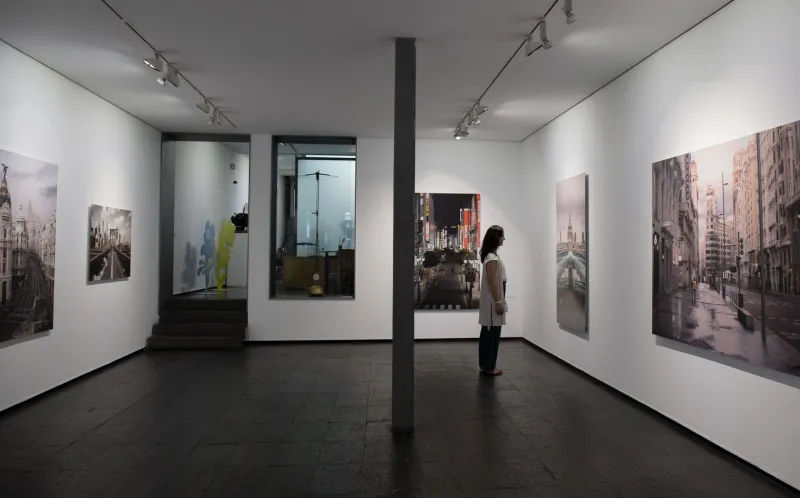
There is a moment familiar to many collectors: a painting purchased under the warm glow of a gallery's carefully calibrated spotlights arrives home, is hung on the wall, and somehow looks entirely different. The colors feel muted. The texture that seemed so alive in the gallery now appears flat. The work has not changed — but the light surrounding it has, and that distinction carries enormous consequence.
Lighting is one of the most underestimated tools in a collector's arsenal. Yet professionals who work at the intersection of architecture, design, and art have long understood that illumination is not merely a backdrop — it is an active participant in the viewing experience.
The Myth of "Good Lighting"
Among collectors who are newer to curating their home environments, a common assumption persists: that more light means better visibility, and better visibility means better appreciation. Lighting designers who work with private collectors and residential galleries challenge this notion directly.
Brightness alone does not constitute quality illumination. In fact, excessive or poorly directed light can cause visual fatigue, wash out subtle tonal gradations, and create distracting glare across varnished surfaces. The goal, as professionals in museum environments have long recognized, is controlled, intentional light — positioned and calibrated to serve the specific characteristics of each individual work.
Museum curators have spent decades refining these principles. Major institutions such as the Art Institute of Chicago and the Metropolitan Museum of Art employ dedicated lighting specialists whose sole responsibility is ensuring that each gallery's illumination schema responds to the artwork on display, not the other way around. The lesson for private collectors is clear: the work should dictate the light, not the architecture of the room.
Color Temperature and Its Profound Effect on Perception
One of the most technically significant — and frequently misunderstood — variables in art lighting is color temperature, measured in Kelvins. Light sources range from warm (approximately 2700K, similar to incandescent bulbs) to cool (5000K and above, approximating daylight). Each end of this spectrum interacts with pigment, medium, and surface texture in distinct ways.
Warmer light sources tend to enrich earth tones, reds, and ochres, making them particularly well-suited to oil paintings, traditional portraiture, and works with rich, layered pigmentation. Cooler light, by contrast, can bring clarity and precision to works on paper, photography, and pieces with cooler palettes — blues, silvers, and grays — though it risks making warmer-toned works appear jaundiced or lifeless.
Many lighting professionals recommend a color temperature between 2900K and 3200K for most residential art settings, as this range tends to render color accurately without the coldness of daylight simulation or the distorting warmth of older incandescent sources. However, the ideal temperature is ultimately dependent on the specific works being displayed and should be tested before any permanent installation is committed to.
For collectors with diverse holdings — a mix of contemporary photography alongside 19th-century oils, for instance — zoned lighting systems that allow for different temperature settings within a single space can offer meaningful flexibility.
Fixture Placement: Angles, Distances, and the Problem of Glare
Beyond temperature, the physical placement of lighting fixtures plays a decisive role in how a work reads on the wall. The conventional guidance from museum lighting practice suggests that ceiling-mounted fixtures should be positioned so that the beam of light strikes the artwork at an angle of approximately 30 degrees from vertical. This placement minimizes glare on varnished or glazed surfaces while still providing sufficient illumination across the entire picture plane.
Wall-mounted picture lights — a popular choice in residential settings for their simplicity and period-appropriate aesthetic — can be effective, but they carry risks. Mounted directly above a canvas, they tend to illuminate the upper portion of a work more intensely than the lower, creating an uneven wash that distorts the artist's intended tonal relationships. When using picture lights, collectors are advised to select models with adjustable arms and to experiment with positioning before finalizing placement.
Track lighting systems offer perhaps the greatest degree of flexibility for home galleries, allowing fixtures to be repositioned as a collection evolves. Adjustable-head spotlights on a track system can be directed precisely, and dimmer controls allow for mood-appropriate adjustments throughout the day.
The Role of Natural Light
Natural light presents both opportunity and risk. Many collectors are drawn to the idea of their works bathed in daylight — and certain artists, particularly the Impressionists, created work intended to be viewed under precisely those conditions. However, ultraviolet radiation present in sunlight is among the most significant causes of pigment degradation and fading in works on paper and canvas alike.
For collectors displaying works of significant monetary or sentimental value, UV-filtering glazing and window film can dramatically reduce light-related damage without eliminating natural illumination entirely. Works of particular fragility or value — original prints, watercolors, and works on paper — are best kept away from direct sunlight regardless of protective measures.
When natural light is incorporated into a display environment, its variability across the day and across seasons must be factored into the overall lighting design. A painting that appears luminous at noon may be barely visible by late afternoon in the same room without supplemental artificial illumination.
Practical Steps for the Thoughtful Collector
For collectors looking to meaningfully improve their home display environments, the process need not be overwhelming. A few foundational steps can yield significant results.
First, assess the existing light sources in each display space and identify their color temperatures. Most LED bulbs and fixtures list this information on their packaging or in product specifications. Replace mismatched sources with a consistent temperature across a given room or zone.
Second, consider commissioning a consultation with a residential lighting designer who has experience with art environments. Many such professionals offer hourly consultations that can provide targeted recommendations without the expense of a full redesign.
Third, treat lighting as a living element of your collection — one that may need to be reconsidered each time a new work is acquired or a piece is rehung. The relationship between light and art is not static, and collectors who remain attentive to this relationship will find that their works reveal new dimensions over time.
The works you collect deserve to be seen at their fullest — and that fullness begins not with the art itself, but with the quality of the light that makes it visible.