The Interpretive Edge: Why Framing and Glazing Are Curatorial Decisions
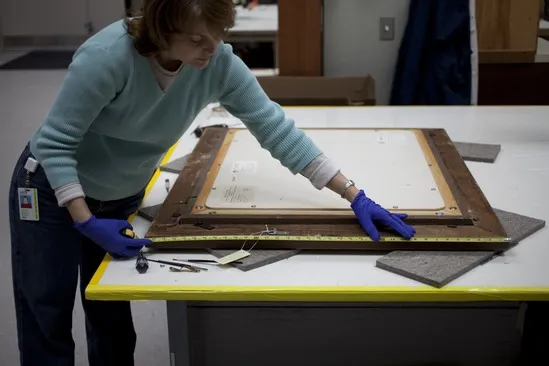
Photo: RichardMcCoy, CC BY-SA 3.0, via Wikimedia Commons
There is a persistent belief that framing is a matter of taste, a finishing touch applied after the serious decisions have been made. The belief is convenient because it allows collectors to treat presentation as decoration rather than interpretation. But a frame changes the way a work is read. It can make a modest drawing feel monumental or a bold painting feel constrained. It can protect a fragile surface or expose it to harm. Presentation is not neutral, and collectors who treat it as neutral tend to make expensive mistakes.
Presentation Is Interpretation
A frame establishes a boundary between the artwork and the room. It tells the eye where to begin and where to stop. A wide mat can create breathing room around a work on paper; a narrow one can create tension. A dark frame can absorb light and make a painting feel somber; a light frame can lift it. Glazing can introduce reflections that distance the viewer or reduce glare that would otherwise obscure the surface. None of these choices is merely practical. Each one participates in the work's meaning.
This is why framing deserves the same deliberation as hanging and lighting. The collector who spends months selecting a work and an afternoon selecting a frame has reversed the hierarchy of decisions. The frame will remain with the work for years, and in some cases it will outlast the collector's ownership. It should be chosen with the work's character, period, and condition in mind.
When Framing Becomes a Risk
Poor framing is not only an aesthetic problem. It can be a conservation problem. A frame that is too tight can abrade the edges of a canvas or compress a work on paper. Backing materials that are acidic can stain and weaken paper over time. Adhesives, tapes, and mounting methods that seemed temporary can become permanent sources of damage. A frame that traps moisture can encourage mold. A glazing material that touches the surface of a work can transfer condensation or cause abrasion.
These risks are often invisible at the point of sale. A work may look well presented in a gallery and still be poorly mounted beneath the frame. Collectors buying at auction or from a private seller should ask for condition reports and, where appropriate, have the framing examined by a conservator. The cost of a professional assessment is modest compared with the cost of reversing careless damage.
Glazing, Matting, and the Conservation Chain
Glazing is often discussed in terms of glare and UV protection, but the choice of material matters for other reasons. Acrylic glazing is lighter and less likely to shatter than glass, which makes it attractive for large works and high-traffic areas. Glass offers excellent clarity but adds weight and breakage risk. Anti-reflective coatings can improve visibility, but they do not necessarily provide UV protection. The collector should understand what the glazing is actually doing, not simply accept the default option.
Matting is equally consequential. Conservation matting should be acid-free and should separate the work from the glazing. Hinging and mounting should be reversible and should not rely on pressure-sensitive tapes. For works on paper, the entire package—frame, mat, backing, glazing, and mounting—functions as a conservation chain. A weak link can compromise the whole object.
Respecting Artist Intent Without Treating It as Absolutism
Some artists specify framing, and those specifications deserve respect. A frame may be part of the work's original presentation, particularly in certain periods or conceptual practices. Removing or replacing an artist-approved frame can alter the work's identity and, in some cases, its value. Collectors should document original framing and consult the artist's estate or gallery before making changes to historically significant presentation.
At the same time, artist intent is not a universal veto. Frames age, glazing yellows, and materials degrade. A frame that was appropriate when the work was made may now be damaging it. The responsible approach is not blind preservation of every original element, but informed preservation of the work's integrity. A conservator can advise on what should be retained, what can be replaced, and what should be documented before any change is made.
Choosing Materials That Protect Without Overpowering
The best framing does not announce itself. It supports the work without competing with it. That principle sounds simple, but it requires judgment. A frame that is too ornate can overwhelm a delicate drawing; a frame that is too minimal can make a historical work feel unmoored. The goal is not to disappear entirely, but to create a presentation that feels inevitable rather than imposed.
Collectors should consider scale, period, medium, and setting. A contemporary photograph may benefit from a simple, deep frame that allows the image to breathe. A nineteenth-century landscape may require a period-appropriate frame that respects its original context. A work on paper may need generous matting to protect it from the glazing. These choices should be made with the work in hand, not from a catalog.
A Curatorial Checklist for Collectors
Before reframing, ask whether the current presentation is original, whether it is causing damage, and whether it can be improved without altering the work's character. Request conservation-grade materials and reversible mounting. Confirm that glazing does not touch the surface. Keep records of the frame, mat, and mounting method. If the work is valuable or fragile, consult a conservator rather than a general framer.
Framing is not the final step in acquiring art. It is one of the ways a collector participates in the work's life. The frame, the mat, and the glazing are not neutral accessories. They are decisions that shape perception, protect value, and determine how the art will be experienced by everyone who stands before it. Collectors who treat presentation as interpretation tend to choose more carefully—and live with better results.