Beautifully Broken: How the Art World Fell in Love With Imperfection
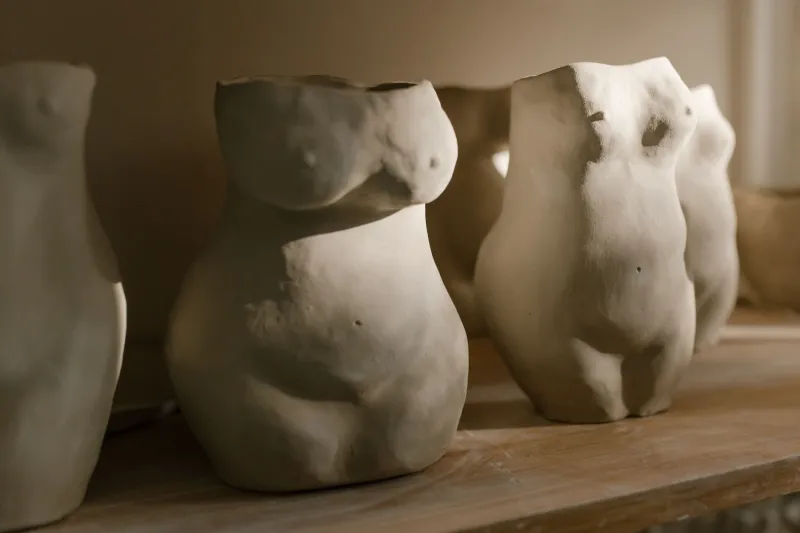
There is a particular kind of courage embedded in a crooked line. A handmade ceramic bowl that lists slightly to one side, a canvas whose paint has cracked along an unexpected fault, a sculpture whose welding seams remain deliberately exposed—these are not accidents waiting to be corrected. They are, increasingly, the point.
Across American collecting circles, a quiet but unmistakable shift has taken hold. Collectors who once sought the most technically refined, perfectly composed works are now gravitating toward pieces that wear their making openly—works that reveal struggle, process, and the irreducible humanity of their creators. Understanding this movement requires looking not just at the art itself, but at the cultural anxieties and values that make imperfection feel, paradoxically, like the most honest thing a work can offer.
The Tyranny of the Perfect
For much of the twentieth century, Western aesthetics held technical mastery as its highest standard. A painting was judged by the seamlessness of its execution; a sculpture by the precision of its form. Galleries curated toward polish, and collectors followed suit, equating refinement with value.
But somewhere in the intersection of late capitalism, digital saturation, and a broader cultural reckoning with authenticity, that framework began to fracture. We now live in a world where virtually any image can be rendered flawlessly by software, where AI can produce technically impeccable compositions in seconds. Perfection, once the province of skilled human hands, has become democratized to the point of meaninglessness.
In this context, the visible mark of human labor—the drip that was left in place, the asymmetry that was chosen rather than corrected—carries an entirely different weight. It signals something a machine cannot replicate: genuine decision-making, genuine risk, genuine presence.
Wabi-Sabi Meets the American Collector
The Japanese philosophical concept of wabi-sabi—finding beauty in transience, incompleteness, and imperfection—has long been discussed in design and architecture circles, but its influence on American art collecting has deepened considerably in recent years. Collectors are increasingly fluent in this language, even when they do not name it directly.
Speak to collectors at any major American art fair—from the Armory Show in New York to Untitled Art Fair in Miami—and you will encounter a recurring vocabulary: raw, honest, unguarded, process-driven. These are not terms that describe technical accomplishment. They describe emotional resonance. They describe the sense that a work has not been scrubbed clean of its origins.
This appetite extends well beyond ceramics, where the tradition of embracing natural variation has always been strong. Painters who leave pentimento visible—those ghostly traces of earlier compositional decisions showing through the final layer—are finding enthusiastic audiences. Textile artists who incorporate deliberate irregularities into their weaves are commanding serious attention. Even photographers who embrace grain, blur, and chemical unpredictability are being reassessed as practitioners of something more meaningful than technical failure.
What Collectors Are Actually Buying
When a collector chooses a work that is visibly imperfect, they are not simply making an aesthetic statement. They are making a philosophical one.
In part, this is a rejection of the idea that art should be a finished, resolved object—something that has had all uncertainty removed from it before it enters the world. Many of today's most sought-after works feel genuinely open-ended, as though the conversation between artist and material is still ongoing. There is an invitation in that openness. The collector becomes not merely an owner but a witness.
There is also an element of trust involved. A work that shows its seams asks the viewer to meet it without the mediation of perfection. It demands a more active kind of looking—one that is willing to sit with discomfort, to find meaning in what might initially read as roughness or incompletion. Collectors who respond to this demand often describe a deeper and more durable attachment to such works than to technically accomplished pieces that, however beautiful, maintain a certain emotional distance.
This is not to suggest that technical mastery is irrelevant. The most compelling imperfect works are not careless—they are precisely imperfect. The artist has made deliberate choices about where to leave things raw, where to allow the process to show, where to resist the urge to resolve. That level of intentionality requires as much skill as any traditional technique, simply applied toward different ends.
The Market Responds
The commercial dimension of this shift is real and measurable. Works by artists who operate outside conventional aesthetic frameworks—those associated with outsider art, folk traditions, and anti-formalist movements—have appreciated significantly in recent years. Galleries that specialize in raw and process-driven work report sustained collector interest that shows no sign of diminishing.
Institutions have taken notice as well. Major American museums have mounted significant exhibitions devoted to artists whose practices center on deliberate imperfection, from the gestural expressionism of the postwar era to contemporary practitioners who work in direct lineage with that tradition. The critical vocabulary has expanded to accommodate these works, and with it, collector confidence in their long-term cultural relevance.
For newer collectors entering the market, this represents a genuine opportunity. Works by emerging artists who embrace anti-aesthetic principles are often more accessible in price than their technically polished counterparts, and the critical conversation surrounding them is active and growing. Collecting in this space now, before institutional consensus fully solidifies, is a position many experienced collectors actively recommend.
Living With the Unresolved
There is, finally, something worth noting about what it means to live with imperfect art—to place it in your home, to encounter it daily, to let it exist alongside the ordinary textures of your life.
A flawless work can sometimes feel like a judgment, a standard against which the domestic environment inevitably falls short. An imperfect work, by contrast, tends to feel like company. It does not demand a particular kind of reverence. It participates in the life around it rather than holding itself apart.
Collectors who have made this shift often describe their relationships with these works in strikingly personal terms—not as objects they admire from a careful distance, but as presences they find genuinely sustaining. The crack in the glaze, the visible brushstroke that changed direction, the weave that tightens and loosens with the rhythm of a human hand: these are the marks that make a work feel alive.
In the end, the growing devotion to imperfect art may be less about aesthetics than about longing—a longing for evidence of human effort in a world that increasingly obscures it. The collectors who understand this are not simply buying art. They are insisting, quietly and persistently, on the value of the made thing.