Rooted in Place: The Case for Building Your Collection From the Ground Up — Locally
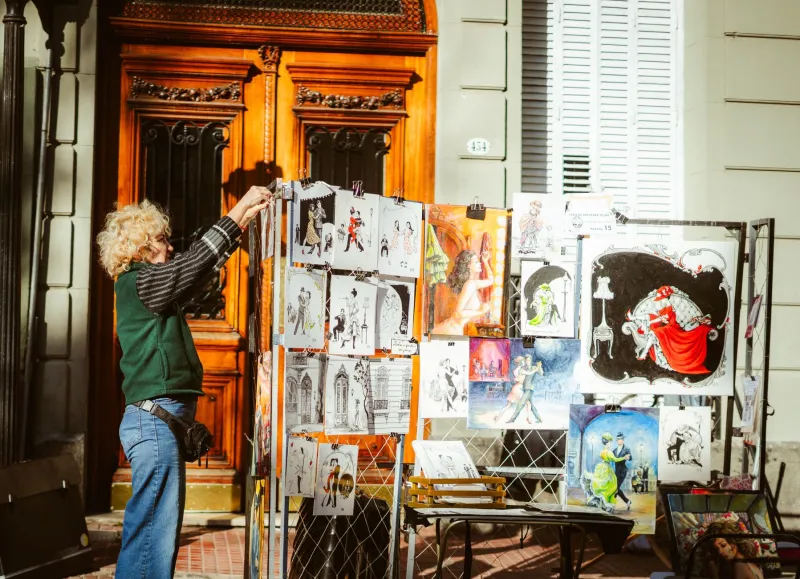
The instinct among ambitious collectors is often to look outward and upward — toward the major auction houses, the flagship galleries of New York and Los Angeles, the international art fairs that define the calendar of the contemporary art world. This is an understandable impulse. It is also, increasingly, an incomplete one.
Across the United States, a remarkable diversity of regional art ecosystems has developed — each shaped by geography, industrial history, cultural migration, and the particular social conditions of its place. These ecosystems produce artists of genuine distinction and originality, many of whom receive little attention from national platforms precisely because those platforms are not designed to look carefully at what is happening in Tulsa, or Asheville, or Pittsburgh, or Tacoma.
For collectors willing to engage at the regional level, the rewards are considerable — and they extend well beyond the financial.
Why Place Matters in Contemporary Art
The relationship between place and artistic production is not merely romantic. It is structural. Artists who work within specific regional contexts — whether urban or rural, coastal or interior, industrial or agrarian — are responding to material conditions and cultural inheritances that are genuinely distinct. The result is work that carries a particular specificity of reference, a visual and conceptual vocabulary shaped by lived experience in a particular American landscape.
Consider the art emerging from the Pacific Northwest, where a long tradition of engagement with old-growth forests, Indigenous land rights, and the tension between preservation and extraction has produced painters, printmakers, and installation artists whose work would be unimaginable anywhere else. Or the Rust Belt, where cities like Detroit, Cleveland, and Pittsburgh have seen successive generations of artists reckon with deindustrialization, demographic transformation, and the complicated beauty of post-industrial infrastructure. Or the American South, where a rich and contested cultural inheritance — in music, in literature, in craft — continues to generate artistic responses of remarkable depth and variety.
National platforms, by their nature, tend to flatten these distinctions. They select for work that translates across contexts, that can be appreciated without local knowledge, that speaks in the lingua franca of the international contemporary art world. There is nothing wrong with such work. But it represents only a fraction of what is being made.
The Collector's Advantage at the Regional Level
For collectors, engaging with regional art ecosystems offers several concrete advantages that national-level collecting cannot provide.
The first is access. In most regional markets, collectors who make a genuine effort to participate — attending open studio events, supporting local non-profit art spaces, visiting working artists in their studios — can develop relationships with artists at an early stage of their careers. These relationships are not merely transactional. They are the foundation of a collecting practice that is intellectually rich and personally meaningful.
The second advantage is price. Work by artists who have not yet achieved national recognition is typically available at a fraction of the cost of comparable work in major metropolitan markets. This is not a reason to acquire work you do not genuinely value — but it does mean that collectors operating with modest budgets can build holdings of real depth and quality by focusing their attention regionally.
The third, and perhaps most significant, advantage is understanding. The collector who knows the local art ecosystem — who understands the institutional histories, the influential teachers, the gallery relationships, the cultural debates that have shaped the work being made — is in a far stronger position to evaluate what they are acquiring than the collector who encounters the same work at an art fair with no context beyond a brief wall label.
Mapping the American Regional Art Landscape
The United States does not have a single regional art scene. It has dozens, each with its own character and its own institutions.
In the Southwest, cities like Santa Fe, Albuquerque, and Tucson support art communities shaped by the intersection of Indigenous traditions, Spanish colonial history, and the particular quality of light and landscape that has drawn artists to the region for more than a century. The work being made here — in painting, ceramics, weaving, and mixed media — often engages with questions of cultural continuity and hybridity that are among the most urgent in contemporary American life.
In the Midwest, a network of artist-run spaces, regional museums, and university art programs has sustained a culture of making that is frequently overlooked by coastal tastemakers. Chicago is the most visible node in this network, but the broader Midwestern art ecosystem extends through Kansas City, Minneapolis, Columbus, and dozens of smaller cities where artists are doing serious work with minimal external attention.
In Appalachia and the broader rural South, craft traditions — woodworking, quilting, pottery, weaving — are being engaged by a new generation of artists who are neither nostalgic nor ironic in their relationship to these practices. They are, rather, bringing contemporary conceptual concerns to bear on inherited forms, producing work that is simultaneously rooted and rigorously contemporary.
Building Relationships, Not Just Holdings
The most important shift that regional collecting requires is a shift in orientation — from acquisition to relationship. The collector who attends a regional open studio not to buy but to look, to listen, and to understand is building something that no art fair visit can replicate: a genuine knowledge of a place and its creative life.
Over time, this knowledge compounds. The collector who has spent three years attending exhibitions at a regional non-profit art space, buying modestly and thoughtfully, talking with artists and curators and fellow collectors, begins to develop a form of expertise that is both locally specific and broadly applicable. They understand how careers develop, how communities support and challenge their members, how the work changes in response to external pressures and internal discoveries.
This is, ultimately, what the most meaningful collecting has always looked like — not the rapid accumulation of validated names, but the patient development of genuine understanding. Regional art ecosystems, with their intimacy and their depth, are among the most fertile environments in which that understanding can grow.
At Artag Gallery, we celebrate the full breadth of American artistic production — from the internationally recognized to the locally cherished. We invite collectors to look not only outward to the centers of the art world, but inward to the communities where the next generation of significant work is being made, often in places that reward the collector willing to pay attention.