What Your Gut Is Really Telling You: Decoding the Emotional Signals That Define Your Collecting Identity
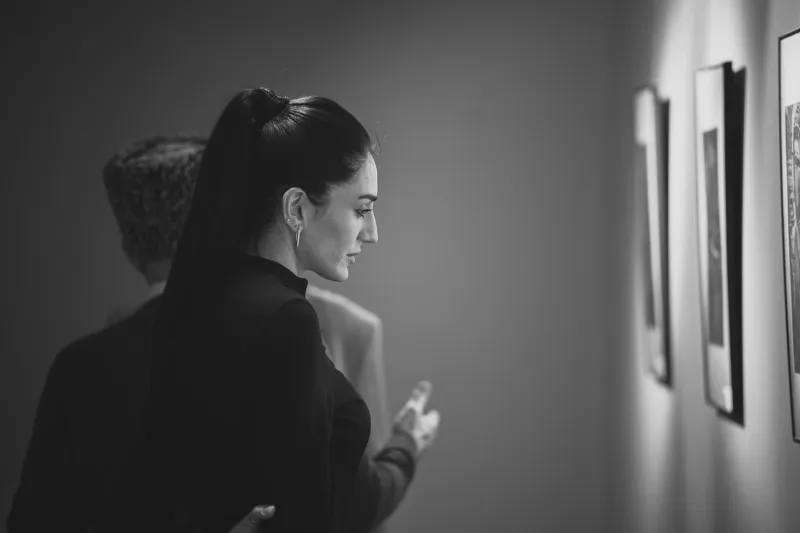
It happens in a matter of seconds. You round a corner at a gallery opening, or scroll past an image on a screen, and something stops you. Your attention narrows. The rest of the room recedes. You are not yet thinking about provenance, or scale, or whether the work will suit the wall above your fireplace. You are simply arrested — held in place by something you cannot immediately articulate.
This moment — the collector's version of love at first sight — is the subject of considerable fascination and, among serious collectors, considerable suspicion. Is it a reliable signal, or a seductive distraction? Is it the beginning of a meaningful acquisition, or the opening move in a transaction you may later regret?
The answer, as with most things in the art world, is more nuanced than either pure trust or pure skepticism would suggest.
The Architecture of Aesthetic Response
Psychological research into aesthetic experience suggests that our immediate responses to visual art are shaped by a complex layering of factors, many of which operate below the threshold of conscious awareness. Childhood environments, formative cultural experiences, the visual language of places we have lived or longed for — all of these contribute to what might be called an individual's aesthetic architecture: the largely invisible framework through which new visual experiences are filtered and evaluated.
For collectors, this means that the work you are drawn to is rarely arbitrary. It is, in a meaningful sense, autobiographical. The collector who consistently gravitates toward dense, layered surfaces may be expressing something about a preference for complexity and depth that extends well beyond the visual. The collector who is repeatedly drawn to spare, luminous abstractions may be articulating a relationship with stillness and restraint that the rest of their life does not always accommodate.
Beginning to read these patterns — not with clinical detachment, but with genuine curiosity — is one of the most productive practices a collector can undertake.
Distinguishing Signal from Noise
Not every moment of aesthetic excitement is an authentic collecting signal. Some responses are genuine revelations; others are the product of context, mood, social influence, or the particular quality of light in a gallery on a given afternoon. Learning to distinguish between the two is a skill that develops over time and with deliberate attention.
One useful exercise is to revisit a work — whether in person or through documentation — after a meaningful interval. The piece that moved you at a gallery opening, revisited three days later in a different context, will either retain its hold or begin to loosen it. If the pull persists, it is worth examining more closely. If it fades, you have learned something valuable about the nature of the original response.
Another practice involves cataloguing your reactions across multiple encounters. Keeping a brief written record of the works that stop you — including not just what you felt but what specific elements you noticed, and what personal associations arose — builds a body of evidence about your collecting sensibility that is far more reliable than memory alone.
The Role of Personal History
Among the most powerful forces shaping a collector's aesthetic responses is personal history — and specifically, the visual experiences that were formative rather than merely pleasant. The collector who grew up in a household where a particular style of folk art was displayed may find themselves drawn to works that share its formal qualities, even decades later and in entirely different contexts. The collector who encountered a defining landscape during a period of personal significance may respond with unexpected intensity to works that echo its palette or atmosphere.
These connections are not weaknesses to be overcome. They are, rather, the raw material of a genuine collecting identity. The collector who understands why certain works move them — who can trace the thread from a present-tense response back through personal history to its origin — is far better positioned to make acquisitions that will remain meaningful over time.
This is the difference between a collection that reflects who you are and one that merely reflects what was available, or what was admired by others, at the moment of acquisition.
When Instinct and Analysis Converge
The most experienced collectors tend to describe a particular quality of response that is distinct from either pure emotion or pure analysis. It is a state in which the gut reaction and the considered evaluation arrive simultaneously — in which the immediate pull toward a work is accompanied, almost at once, by a clear sense of why the work merits that pull.
This convergence does not come automatically. It is the product of sustained engagement with art across a wide range of contexts: galleries and art fairs, studio visits and museum collections, regional shows and international exhibitions. The broader and more varied the collector's visual education, the more reliable the instinctive response tends to become.
At Artag Gallery, we encourage collectors at every stage of their journey to treat their emotional responses not as conclusions, but as starting points. The moment of arrest — that involuntary pause before a work that speaks to something deep and particular in you — is an invitation to inquiry. Follow it. Ask what the work is doing, and what it is doing to you specifically. The answers will tell you more about your collecting identity than any market report or critical consensus ever could.
Building a Collection That Reflects Your True Aesthetic Values
Ultimately, the goal of decoding your emotional responses to art is not to become more strategic in a narrowly financial sense. It is to become more authentic — to build a collection that is genuinely yours, shaped by the full complexity of who you are and what you have experienced, rather than by external validation or the pressure of trend.
The collectors whose holdings prove most enduring — both in personal meaning and, often, in cultural significance — are those who learned to trust their deepest responses while remaining curious about their origins. They did not suppress the gut reaction. They followed it, questioned it, and allowed it to lead them toward a clearer understanding of what they truly value. That, in the end, is what collecting at its finest has always been about.