Collected With Purpose: The Case for Restraint in an Age of Abundance
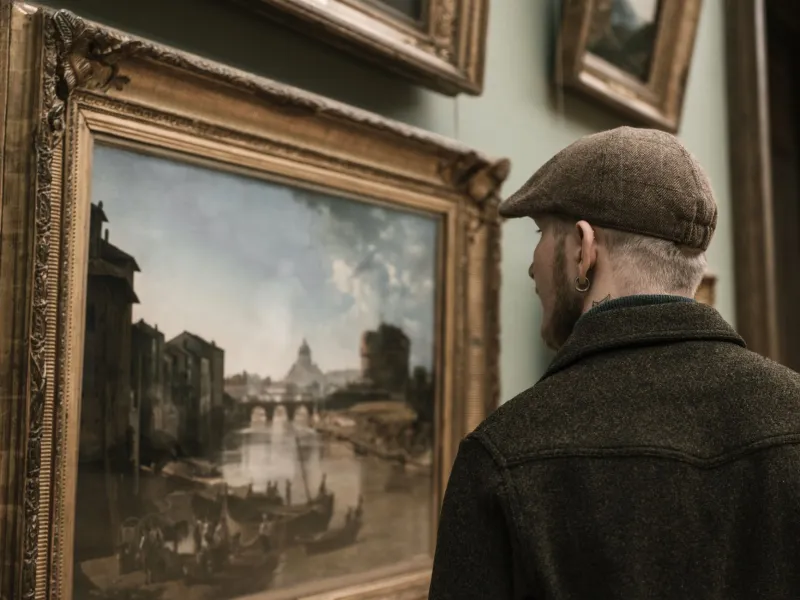
There is a particular kind of silence that follows a decision not to buy. No transaction record, no shipping invoice, no wall space claimed. For many collectors, especially those early in their journey, that silence feels like failure — an opportunity surrendered, a conversation missed. But for collectors who have spent decades refining their eye, that silence is something else entirely: the sound of a collection becoming more itself.
In a cultural moment defined by access — online marketplaces, international art fairs, social media feeds brimming with studio previews — the sheer volume of available work has never been greater. The question facing serious collectors is no longer where to find art. It is how to resist it.
The Myth of the More-Is-More Collection
The popular image of the committed collector often involves abundance: walls covered floor to ceiling, storage units holding overflow, auction paddles raised with confidence. Volume, in this view, signals passion and commitment. But many of the most respected private collections in the United States tell a different story.
Consider the collections that earn lasting critical attention — those that travel to museum exhibitions, anchor estate sales with genuine cultural weight, or inspire retrospective scholarship. They share a quality that is difficult to name but immediately felt: coherence. Each work seems to know why it is there. Nothing competes for authority in a way that diminishes its neighbors.
That coherence is never accidental. It is the product of sustained editorial judgment — a willingness, exercised repeatedly over years, to say no.
"The collectors I respect most are the ones who can articulate what their collection is not," says one New York-based art advisor who has worked with private buyers for more than twenty years. "They've defined their boundaries not by what excites them in the moment, but by what serves the larger argument their collection is making."
Developing a Collector's Critical Eye
Discernment is not an innate quality. It is a practice, and like any practice, it requires deliberate cultivation. Most experienced collectors point to a similar developmental arc: early acquisitions driven by instinct and enthusiasm, followed by a gradual reckoning with the consequences of undisciplined buying, and finally a shift toward something more principled.
The reckoning often arrives during a rehang — that humbling moment when a collector surveys their walls and realizes that certain pieces, individually appealing, simply do not belong. They were purchased because they were available, or affordable, or because the gallery presentation was persuasive. But they do not speak to anything the other works are saying.
Rooting out those acquisitions is painful. Selling or donating work that cost real money and emotional investment requires an honest confrontation with past judgment. But collectors who have gone through that process consistently describe it as clarifying — not just for the collection, but for their understanding of what they actually value.
"You learn more about your own taste from the pieces you get wrong than from the ones you get right," notes a Chicago-based collector who has been acquiring work for over thirty years and recently deaccessioned nearly a third of her holdings. "The pieces that didn't fit taught me to ask harder questions before I commit."
Those harder questions tend to cluster around a few essential concerns: Does this work extend a conversation already present in my collection, or does it begin an entirely new one I am not prepared to sustain? Does it reflect genuine engagement with the artist's practice, or was I responding to external validation — a favorable review, a rising market price, a dealer's enthusiasm? And perhaps most importantly: would I still want this piece in five years, stripped of the context in which I encountered it?
The Dealer's Perspective
Gallery professionals occupy a unique vantage point in this dynamic. They witness, across hundreds of client relationships, how different approaches to acquisition play out over time. What they observe tends to confirm what experienced collectors already know: the buyers who develop the most meaningful collections are rarely the most eager ones.
"There's a certain kind of collector who comes in and wants everything," says a dealer based in Los Angeles who represents both emerging and mid-career artists. "They're enthusiastic, which is wonderful, but enthusiasm without structure creates chaos. The collectors who build something lasting are the ones who slow down. They ask more questions. They sit with uncertainty longer before committing."
Dealers also note that restrained collectors tend to develop stronger long-term relationships with the artists they do choose to support. When a collector acquires work selectively and deliberately, each acquisition carries more weight — for the collector, for the dealer, and for the artist. It signals genuine engagement rather than casual accumulation.
Saying No as an Act of Vision
Passing on a piece — even an exceptional one — is not an act of indifference. It is an act of definition. Every time a collector declines a work that does not belong, they are making a statement about what their collection stands for. That statement accumulates over time into something with genuine identity.
This is the paradox at the heart of serious collecting: the collection becomes more powerful not through addition, but through the discipline of subtraction. Each no sharpens the logic of every yes that preceded it.
For collectors still developing that discipline, a few practical approaches can help. Maintaining a written collection statement — a brief articulation of the themes, periods, mediums, or ideas the collection engages — provides a reference point when a compelling but misaligned piece appears. Establishing a waiting period before any acquisition, even a modest one, creates space for the initial excitement to settle and for more deliberate evaluation to take hold. And building relationships with advisors or fellow collectors who will offer honest rather than flattering feedback can provide the external perspective that enthusiasm tends to obscure.
The Long View
Art collecting, at its most meaningful, is a long-form practice. Collections evolve across decades, accumulating depth and complexity that no single acquisition could provide on its own. The works that define a collection in retrospect are rarely the ones acquired impulsively. They are the ones chosen with patience, with purpose, and with a clear sense of where they fit in something larger.
The art market will always generate more compelling work than any single collector can absorb. Learning to let most of it pass — gracefully, without regret — is not a limitation. It is the condition under which a genuinely meaningful collection becomes possible.
At Artag Gallery, we believe that the most enduring collections are built not on volume, but on vision. The pieces that move you most are rarely the ones you pursued first. They are the ones you were ready for.