Originals Are Not the Only Truth: How Prints and Reproductions Are Earning Their Place in Serious Collections
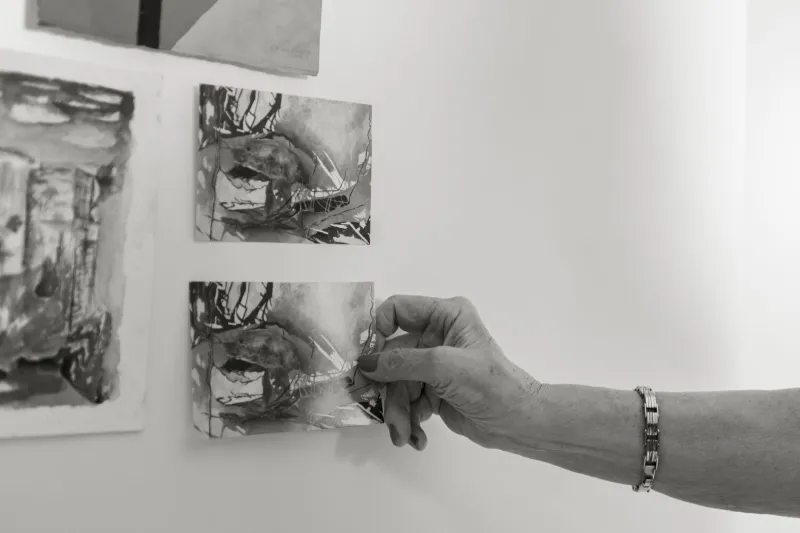
For generations, the collector's hierarchy was largely unquestioned: original works occupied the summit, and everything beneath — the print, the reproduction, the licensed multiple — existed in a kind of cultural basement. Owning a print was acceptable, perhaps even tasteful, but it rarely inspired the same reverence as a signed canvas or a unique sculptural object. That understanding, long treated as self-evident, is now being dismantled by a generation of collectors, curators, and artists who are asking a more fundamental question: what, precisely, makes a work of art valuable?
The answers emerging from studios, galleries, and living rooms across the United States suggest that authenticity is more complicated — and more interesting — than the traditional framework allowed.
The Technology That Changed the Conversation
The conversation around reproductions cannot be separated from the tools that now produce them. Giclée printing technology, which uses archival-quality inkjet processes to render images at resolutions that can exceed the visible capacity of the human eye, has transformed what a reproduction can be. When printed on museum-grade cotton rag or fine art paper, a high-quality giclée can preserve color gradients, textural nuance, and tonal depth with extraordinary fidelity.
Beyond giclée, companies specializing in fine art reproduction now offer canvases treated with textured mediums that simulate brushstroke topography. For collectors who live with these works daily, the distinction between a reproduction and an original can, in certain contexts, become genuinely difficult to locate.
This is not an argument that reproductions are equivalent to originals. It is, rather, an acknowledgment that the distance between them has narrowed in ways that demand a more sophisticated response than simple dismissal.
Redefining What Collectors Are Actually Collecting
Speaking with collectors across the country, a recurring theme emerges: the most thoughtful among them have always collected meaning, not merely objects. A limited-edition print, produced under the direct supervision of the artist, signed and numbered in a run of fifty, carries with it the artist's intention, their aesthetic vision, and — crucially — their authorization. That authorization matters.
Consider the tradition of printmaking itself. Artists such as Rembrandt van Rijn, Francisco Goya, and later Jasper Johns and Robert Rauschenberg treated prints not as secondary byproducts of their practice but as primary works in their own right. The etching, the lithograph, the screenprint — these were mediums with their own grammar, their own demands, their own genius. The contemporary collector who acquires a limited-edition print from a living American artist is participating in a tradition that predates the modern art market by several centuries.
What has changed is the cultural weight assigned to that participation. As access to original works has become increasingly concentrated among institutional buyers and ultra-high-net-worth individuals, the print and the authorized multiple have quietly ascended.
Artists Who Design Across Both Registers
A number of contemporary American artists have made the intentional production of prints and multiples a core element of their practice — not as a commercial afterthought, but as a philosophical commitment to broader access.
Some artists working in abstraction have released carefully produced edition prints alongside their gallery exhibitions, pricing them to reach collectors who cannot compete at auction for the originals. Others working in portraiture and social commentary have used limited-edition prints explicitly as tools of cultural distribution, understanding that the wider the reach of an image, the greater its potential impact.
This dual-register practice — creating for both the primary market and the edition market simultaneously — reflects a matured understanding of how art moves through culture. It also complicates the notion that an artist's 'serious' work exists only in its most expensive form.
The Curator's Perspective
Curators working within both institutional and private contexts have begun to articulate a more nuanced position on the place of editions within a collection. The question they increasingly pose is not whether a work is an original, but whether it is authentic — meaning, whether it was produced with the artist's knowledge, participation, and approval.
An unauthorized reproduction, regardless of its technical quality, remains a fundamentally different object from a signed, numbered edition produced under the artist's oversight. The former is a copy; the latter is a work. That distinction, while seemingly obvious, is one that many collectors have historically failed to draw with precision.
Curators also point to provenance and documentation as the mechanisms that elevate an edition above the status of mere reproduction. A certificate of authenticity, a numbered place within a defined edition size, and clear documentation of the production process all contribute to the legitimacy that transforms a printed image into a collectible work.
Democratization and Its Discontents
The growing acceptance of prints and reproductions within serious collecting circles is, in part, a response to a market that has become increasingly exclusionary. Original works by established artists have risen to price points that place them beyond the reach of all but the wealthiest buyers. For collectors of moderate means — a category that encompasses the vast majority of art enthusiasts in the United States — the edition market represents not a compromise but an alternative path into genuine engagement with contemporary art.
This democratization carries its own complications. As the edition market has grown, so too has the volume of low-quality reproductions marketed with misleading language. Terms such as 'artist-approved' or 'gallery-quality' are applied inconsistently, and collectors who lack experience can find themselves holding objects of little lasting value. Navigating this landscape requires the same due diligence that applies to any acquisition: research the artist's relationship to the edition, verify the production method, confirm the edition size, and insist on proper documentation.
Building a Collection That Embraces the Continuum
The most intellectually coherent approach to collecting in the current moment may be one that treats original works and authorized editions not as competing categories but as points along a single continuum of artistic production. A collection that includes a signed giclée print by a living painter, a numbered lithograph by an established mid-career artist, and an original work by an emerging talent is not a collection that has compromised its standards. It is a collection that has expanded its definition of what those standards are.
At Artag Gallery, the works available to collectors span this continuum deliberately. The underlying belief is that art's capacity to move, challenge, and transform a viewer is not contingent upon its price point or its position in a market hierarchy. What matters is the quality of the encounter — and that encounter is available, in various forms, to anyone willing to look seriously.
The authenticity paradox, then, may resolve itself more simply than it first appears. Authenticity was never about uniqueness alone. It was always about intention, execution, and the integrity of the relationship between artist and object. Prints and reproductions, when produced with care and authorization, possess those qualities in full measure. The collectors who understand this are not lowering their standards. They are refining them.